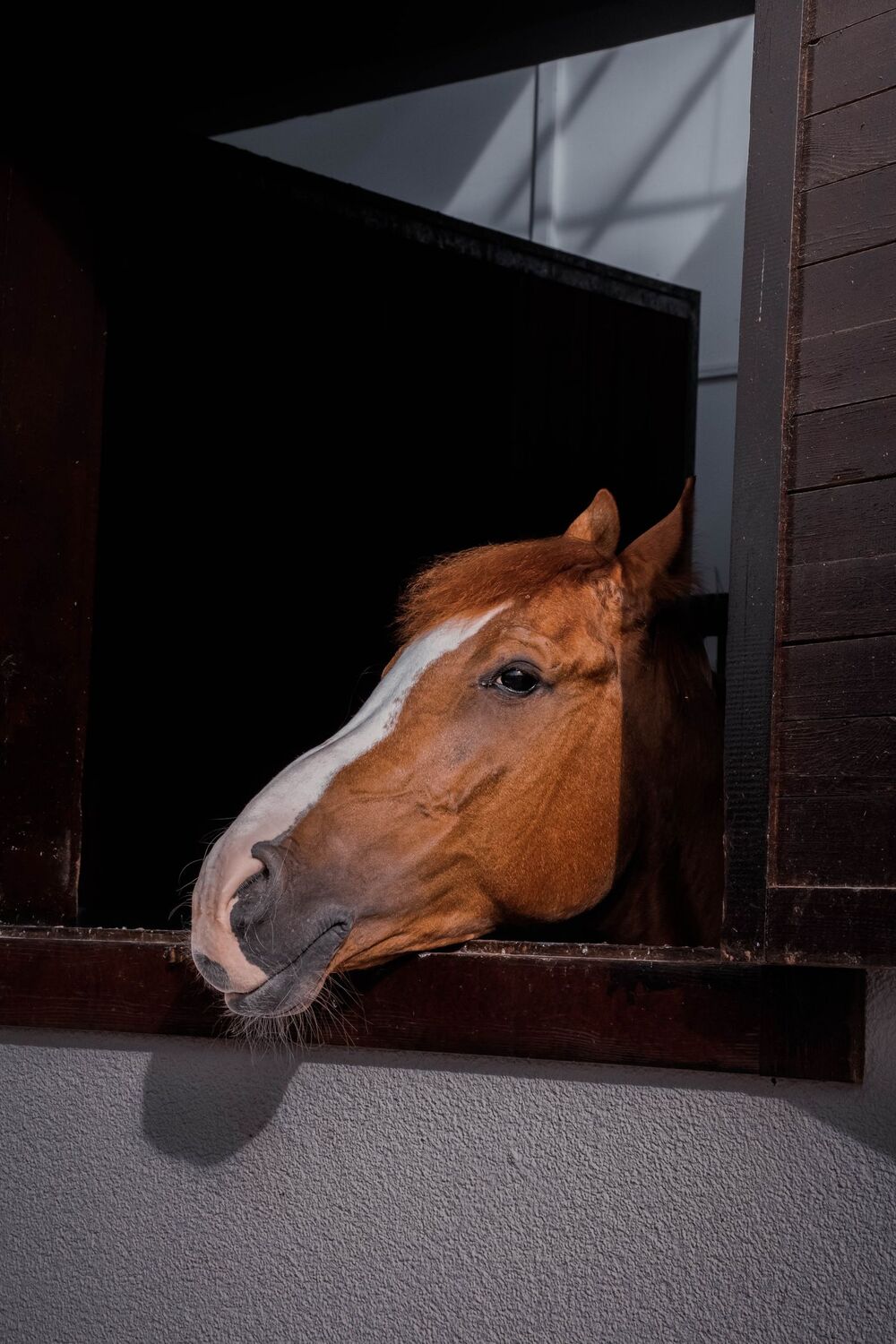
I have spent my life looking out at a world I was built to run in.
First Grass · The Long Gallop
An autobiography · 55,000,000 years
I have been many things — a fox-sized creature in a vanished forest, the engine of your empires, the fastest friend you ever made. Long before your first word, I was already running. This is my story, told from my side of it.
Chapter One · Deep Time
When my kind first appeared, the world had no open plains and no riders. Fifty-five million years ago I was Eohippus — the dawn horse — no larger than a fox, with four soft toes on each forefoot, hiding in swampy forest and browsing on leaves.
Then the forests thinned. Grass — new, tough, everywhere — spread across the continents, and over millions of years I remade myself to meet it. I grew taller to watch the horizon, and faster to cross it. My many toes fused down to a single springing hoof built for one purpose: to run. My teeth grew tall and hard to grind grass laced with silica. Nothing about me is accidental. I am shaped, tooth to hoof, by open ground.
The horse redrawn by 55 million years of grass.
I am American by birth. I evolved here, in North America, and walked the Bering land bridge west into Asia. Then, at the close of the last Ice Age, I disappeared from the Americas entirely — and did not return until Spanish ships carried my descendants back in 1519. The wild mustangs of the American West are not invaders. They are exiles, come home.
Chapter Two · The Steppe
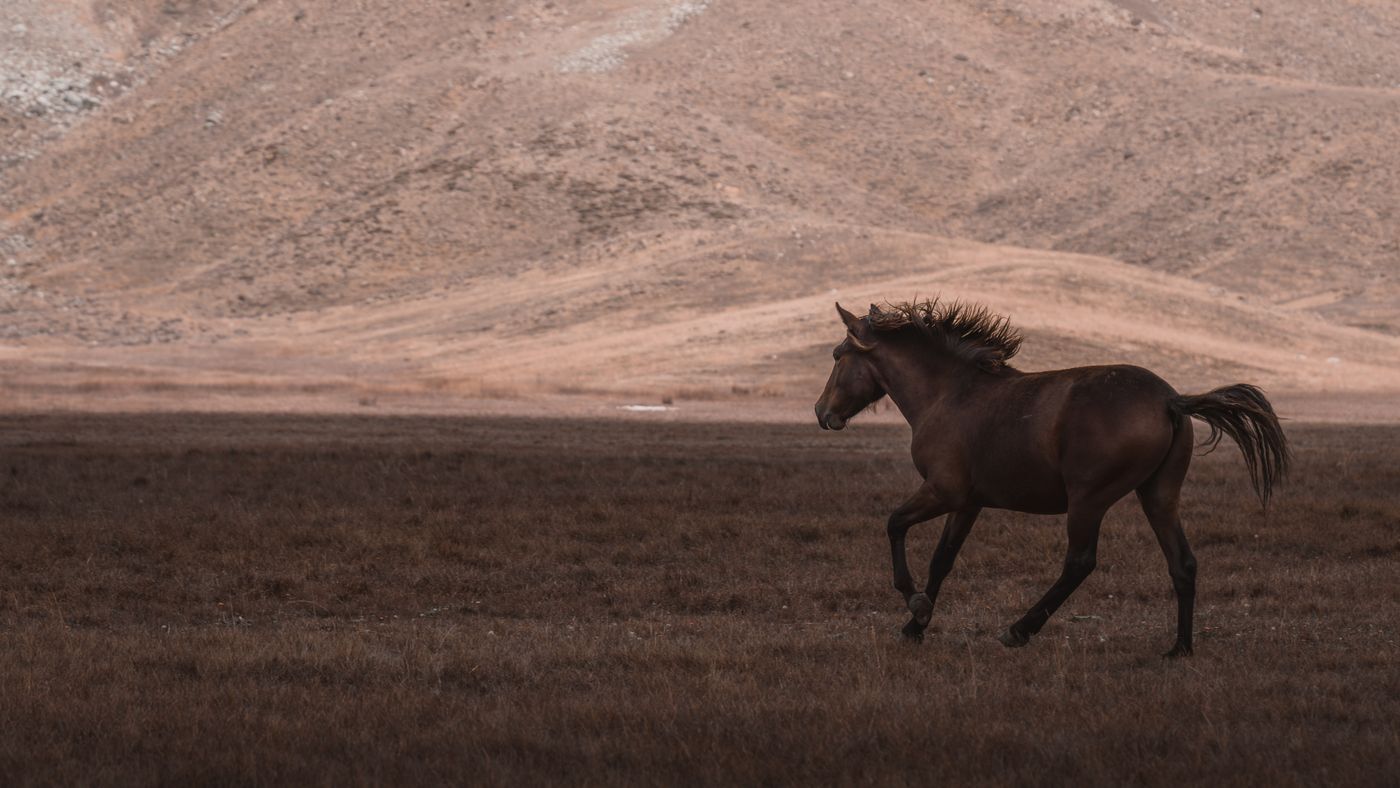
I ran wild across three continents while your ancestors watched from a distance. Then, about 4,200 years ago, on the western Eurasian steppe — the endless grass between the Volga and the Don — a few herders climbed onto my back, and the world tilted.
In 2021, scientists read the DNA of hundreds of ancient horses and found the single homeland of every modern horse on Earth: right there. Every riding horse alive today — Arabian, plough-horse, racehorse, the horse on a city street tonight — descends from that one steppe herd. Within a few centuries, by 2200 BCE, I had carried people and chariots to the edges of the known world.
Even the horses of Botai, once believed to be the first tamed, turned out to belong to a different, wilder line — the ancestors of Przewalski's horse, the last truly wild horse left alive.
One herd. One steppe. Every horse since.
Chapter Three · The Engine
For four thousand years I was the fastest thing you had. I pulled your ploughs and doubled your harvests. I carried your messages, your armies and your kings. The stirrup turned me into a weapon; on my back, the Mongols built the largest land empire in history. And when you finally invented an engine, you named its force after me.
Your unit for the output of an engine is, literally, my name — a machine measured against the animal it replaced.
The Mongol Empire, the largest contiguous land empire ever, was conquered and held at the speed of a horse.
Around 1900, New York City moved on the muscle of more than a hundred thousand working horses — every cart, cab and delivery.
The combustion engine arrived, and in a single generation you no longer needed me. Ten thousand years of partnership, ended in twenty.
Chapter Four · The Animal
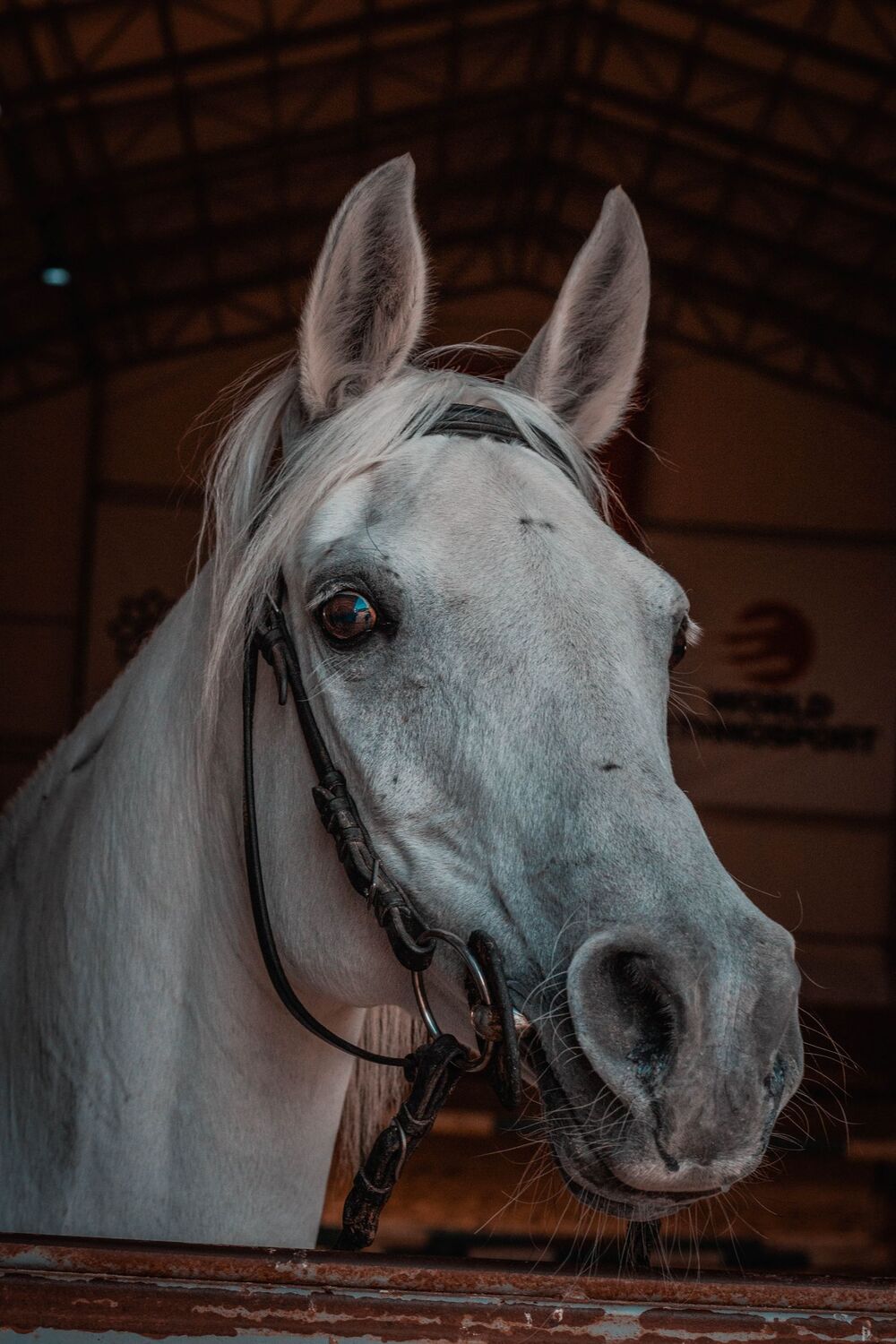
My eyes are the biggest of any land mammal — around nine times the size of yours — set wide for nearly all-around vision. I can watch almost the whole horizon at once.
A stay apparatus of tendons locks my legs so I can doze upright, ready to flee in an instant. I lie flat for deep sleep only among a herd I trust to keep watch.
A foal stands within the hour and can gallop within a few more — a body built, from its first breath, to outrun whatever hunts it.
Most of us carry a heart of four to five kilograms. The racehorse Secretariat's was estimated near ten — more than twice normal — and he won the Belmont by 31 lengths.
I tell your expressions apart, remember whether a particular person was kind or cruel to me, and I can still recall it years later.
I cannot vomit; my gut runs in one direction only. It is why a twist in it — colic — can kill me. I am strength and delicacy in the same body.
Also true: a top speed near 55 mph · roughly 205 bones · a life of 25 to 30 years.
Chapter Five · The Bond
I remember you. My heart slows when you are near.
I am a prey animal. Trust does not come easily to me — which is exactly what makes it mean something when I give it to you.
I read the feeling in your voice and your face. My heartbeat falls when a person I trust stands beside me. Across ten thousand years, no animal has worked more closely at your side, or asked less in return.
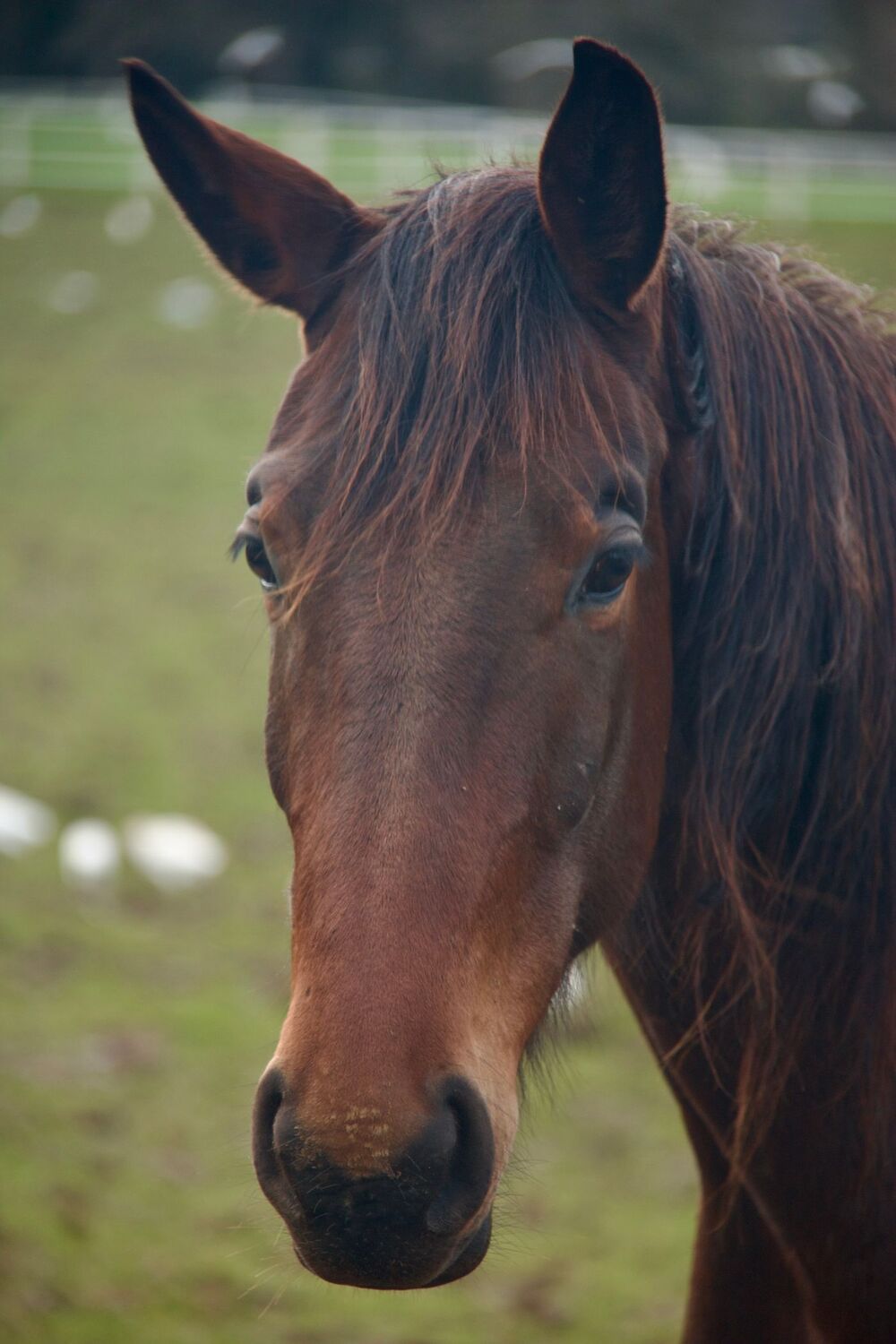
When you look into my eye, something in you goes quiet. You have always known this. It is older than any language you have to explain it.
Coda · First Grass
I gave you the plains and the empires and the plough, and then I handed you the reins to your own future. There is one debt still unpaid.
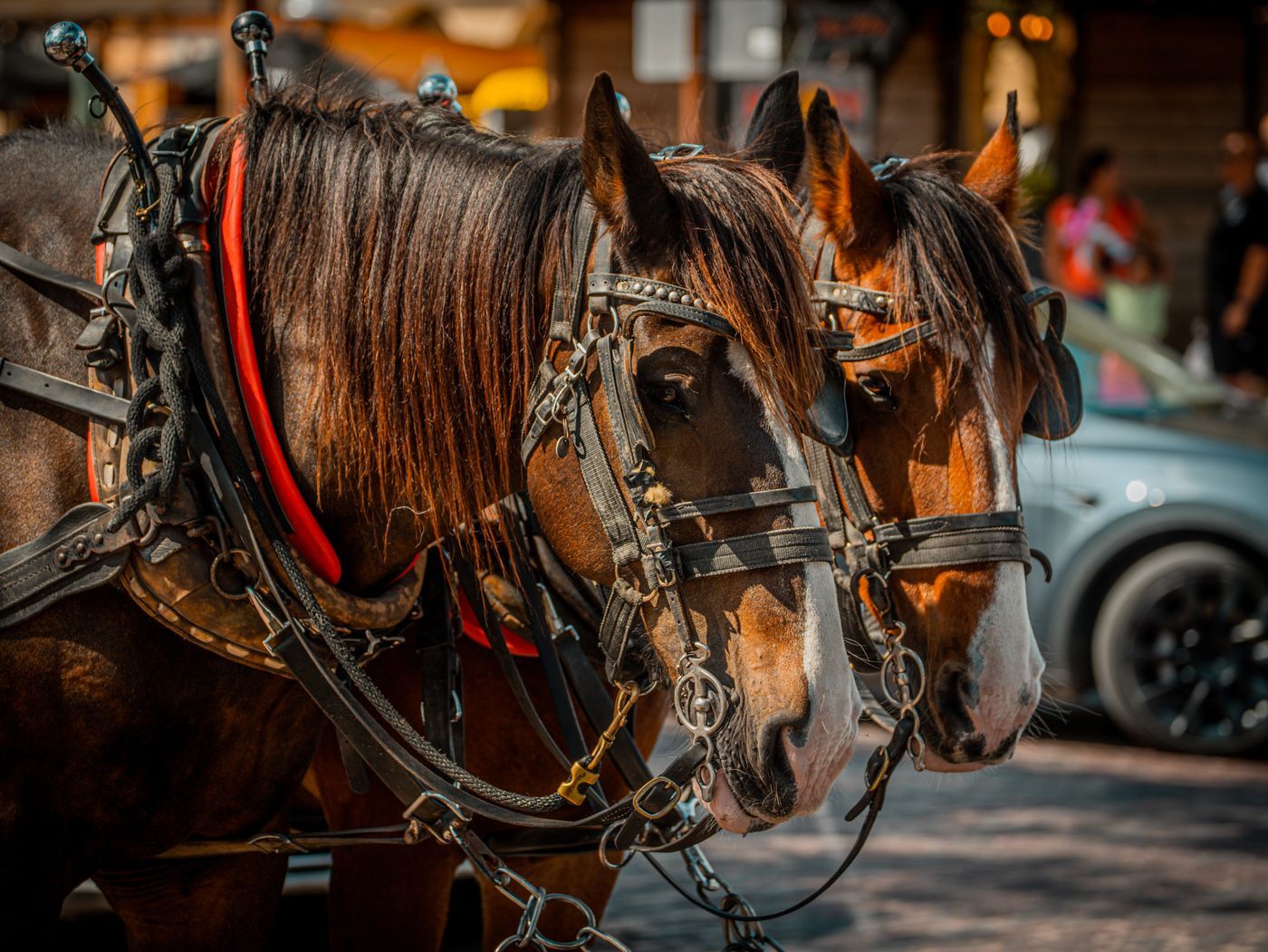
In a handful of cities, some of us still pull carriages through traffic into old age. First Grass is a simple idea: when a working horse is finished, bring them home — to a real pasture, to the smell of spring, to the first grass of the year. It is the least you owe the animal that carried you here.
Bring them home